
Sweepstakes Casino Fish Games: Skill-Based Arcade Play Explained
 Available in US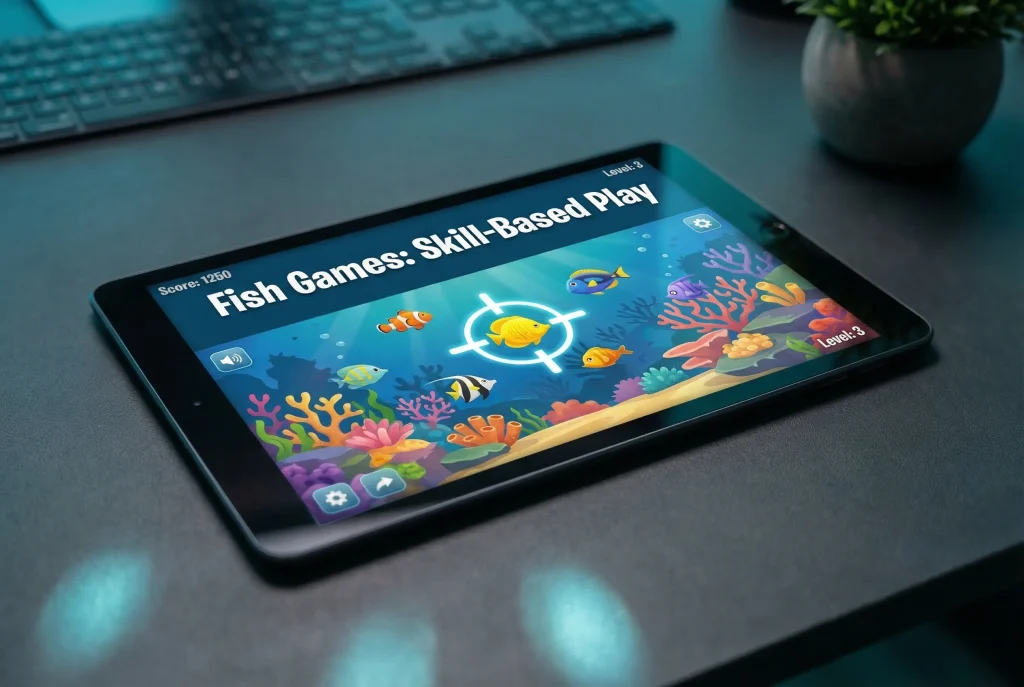
Fish games are the strangest category at sweepstakes casinos, and that is not an insult — it is a genre description. You point a cannon at animated sea creatures, fire projectiles that cost Sweeps Coins, and earn payouts based on which fish you manage to kill. Boss monsters are worth more. Schools of small fish are worth less. Your aim, timing, and weapon selection all influence the outcome, blending arcade-style skill with the randomized hit mechanics that underpin all casino games.
The format originated in Asian arcade markets, migrated to physical fish table machines in the US, and eventually found its way into online sweepstakes casinos. The sweepstakes market that hosts these games generated $10 billion in total purchases during 2026, according to Eilers & Krejcik Gaming — though fish games represent a small niche within that largely slot-dominated figure. For players accustomed to spinning reels and clicking bet buttons, the experience is disorienting at first — and genuinely different once the mechanics click. This guide explains how fish games work, how they compare to traditional slots, and where you can find them.
How Fish Table Games Work
Fish games present an underwater (or sometimes space-themed) arena where targets swim, float, or fly across the screen. You control a cannon positioned at the edge of the arena. Each shot costs a set amount of SC, and the cost per shot increases with the weapon’s power level. Higher-powered weapons do more damage but drain your SC balance faster.
Every target has a multiplier value assigned to it. Small fish might carry a 2x to 5x multiplier, medium targets range from 10x to 50x, and boss creatures can reach 100x or higher. When you destroy a target, you receive your shot cost multiplied by the target’s value. Shoot a 3x fish with a 0.10 SC bullet and you earn 0.30 SC. Hit a 50x boss with a 0.50 SC shot and you collect 25 SC.
The skill element comes from target selection and shot efficiency. Fish move in patterns — some are slow and easy to hit, others dart across the screen. Boss creatures typically require multiple hits to destroy, and missing means wasting ammunition without earning a return. Experienced players learn to recognize which targets offer the best multiplier-to-hit-probability ratio and focus their fire accordingly.
Here is where the casino element enters: hit detection is not purely based on your aim. The game uses a random number generator to determine whether each shot “connects,” even if your crosshair is perfectly positioned on the target. Think of it as a weighted probability rather than a ballistics simulation. Your aim increases the chance of a hit, but the RNG retains control over the outcome. This hybrid of skill and chance is what makes fish games fascinating to play and complicated to regulate.
Power-ups and special weapons add tactical depth. Some games offer area-of-effect bombs that damage all targets in a radius, chain lightning that jumps between nearby fish, or freezing abilities that immobilize targets for easier shots. These abilities cost more per use but can dramatically increase your SC return during dense fish spawns or boss encounters.
Fish Games vs Traditional Slots
The most immediate difference between fish games and slots is agency. In a slot, you press a button and the outcome is entirely determined by the RNG. Your only decision is bet size. In a fish game, you choose your target, control your weapon, time your shots, and manage your ammunition budget. The feeling of control is substantial, even though the underlying hit probability still involves randomness.
Engagement duration is another key distinction. A single slot spin resolves in seconds. A fish game session flows continuously — targets keep spawning, you keep shooting, and the experience feels more like playing a video game than operating a gambling machine. Sessions tend to run longer, which means SC consumption can be higher than players realize if they are not tracking their balance.
RTP is the area where fish games are most opaque. Most slot providers publish return-to-player figures, even in the sweepstakes market. Fish game RTP is almost never disclosed, partly because the skill component makes it variable — a skilled player who selects targets efficiently will achieve a higher effective RTP than a newcomer who wastes shots on difficult targets. The sweepstakes casino market, which KPMG’s 2026 industry primer describes as having grown at a 60 to 70 percent compound annual rate between 2020 and 2026, includes fish games as a niche segment within a much larger slot-dominated ecosystem. The absence of standardized RTP data for fish games makes it harder to evaluate whether they represent fair value compared to slots with known return rates.
Visual appeal and theme are a matter of taste. Fish games use vibrant, often cartoonish underwater graphics that look and feel nothing like a casino. For some players, this aesthetic distance from traditional gambling is part of the appeal. For others, it feels juvenile. The gameplay itself is anything but — managing your SC budget while making rapid targeting decisions under time pressure is genuinely demanding.
Where to Play: SC Casinos with Fish Games
Fish games are not available at every sweepstakes casino. The format requires specific provider partnerships, and the studios that produce fish titles are different from the mainstream slot providers. Availability is concentrated among crypto-friendly and mid-size platforms rather than the industry’s largest operators.
The platforms that do carry fish games typically integrate them into their main game lobby alongside slots and crash titles. SC betting ranges for fish games tend to start low — as little as 0.10 SC per shot — making them accessible for free-to-play users who want to try the format without committing a large SC balance. At the upper end, some platforms allow shot costs up to 5.00 SC or more for players with larger balances.
Several newer sweepstakes casinos have featured fish games prominently, often marketing them as a differentiator from the slot-heavy libraries of established competitors. These platforms typically partner with studios that specialize in the genre, offering a small but dedicated selection of fish titles alongside their broader game catalogs.
The absence of fish games at the market’s largest operators reflects the format’s niche status. The biggest sweepstakes casinos have historically focused on slots and table games with broad appeal rather than specialty categories. Given that roughly 75% of social sweepstakes casino players never make a purchase, according to SPGA member data, fish games’ SC-per-shot cost structure can be particularly relevant for free-to-play users who need to stretch a limited SC balance. For players specifically seeking fish games, the newer and mid-size platforms are where the selection is strongest.
Regulatory Grey Area
Fish games occupy a particularly ambiguous position in the regulatory landscape. The six states that banned sweepstakes casinos in 2026 — California, New York, Connecticut, Montana, New Jersey, and Nevada, as reported by GamblingInsider — generally wrote their laws to cover sweepstakes gaming broadly, which includes fish games offered through SC platforms.
But fish games also have a separate legal history in the physical arcade space. Standalone fish table machines have faced their own regulatory battles in states like Virginia, Georgia, and Illinois, where they operate in gas stations, convenience stores, and dedicated gaming parlors. Some states classify physical fish machines as illegal gambling devices. Others permit them under skill game exemptions, arguing that the player’s aim and strategy constitute a skill-based activity rather than a game of pure chance.
The online sweepstakes version adds another layer. When a fish game runs inside an SC casino using the dual-currency model, it inherits both the skill game debate and the sweepstakes classification debate simultaneously. Is it a skill game? Is it a sweepstakes promotion? Is it gambling? The answer depends on the state, the specific law, and how broadly regulators choose to interpret it.
For players, the practical takeaway is straightforward: if you are in a state that has banned sweepstakes casinos, fish games at SC platforms are banned along with everything else on the platform. If you are in a state where sweepstakes casinos still operate, fish games are accessible — but the regulatory ground may shift faster than the broader slot category, given the additional scrutiny that skill-based gaming faces in certain jurisdictions.
Sweepstakes Casino Fish Games — More on this topic at sc casino online.
See also California Sweepstakes Casino Ban.