
SC Casino Online: The Data-Backed Guide to Sweepstakes Casinos in 2026
Independent analysis backed by data.
Best Non GamStop Casino UK 2026
Loading...
SC Casino Online: The Data-Backed Guide to Sweepstakes Casinos in 2026
Sweepstakes casinos generated billion in purchases during 2024, according to research by Eilers & Krejcik Gaming for the Social Gaming Leadership Alliance. That figure alone would make the SC casino online model one of the fastest-growing segments in American gaming. But there is a twist: the same year the industry posted those numbers, six US states moved to ban it entirely.
This is the central tension defining sweepstakes casinos right now. On one side, a business model that lets players across most of the country access slot-style games, table games, and even live dealer experiences through a dual-currency system that technically operates outside traditional gambling law. On the other, a regulatory backlash gaining momentum in state legislatures from Sacramento to Albany. The model is legal in roughly 33 states as of early 2026, down from the "available in 45+ states" language that operators were confidently using just two years ago.
This guide does not rank SC casinos by affiliate commission or hand out promo codes. It is built around publicly available data from KPMG, the American Gaming Association, Eilers & Krejcik Gaming, and the IRS. What follows is a data-backed analysis of how the sweepstakes casino model actually works, where it stands legally, what the financial numbers look like, and what players need to know before choosing a platform. If you are looking for an honest, numbers-first assessment of the SC casino online landscape, this is where the data lives.
The Numbers Behind the Sweepstakes Casino Boom and Backlash
- The SC casino online market hit billion in gross sales in 2024, with KPMG estimating a 60-70% compound annual growth rate between 2020 and 2024. Separately, Gaming Innovation Group estimated the market grew from .1 billion in 2022 to a projected .9 billion by 2025 at a 31% CAGR — but analyst forecasts now project a 10% revenue decline in 2026 following bans in six states.
- Roughly 33 US states still permit sweepstakes casino play. California, New York, Connecticut, Montana, New Jersey, and Nevada enacted legislative bans during 2025, removing markets worth billions in annual purchases.
- Operators return 65-70% of purchases to players as prizes, issue 1099-MISC forms (not W-2G) for redemptions — with the reporting threshold rising from 0 to ,000 starting in 2026 under the One Big Beautiful Bill Act — and the IRS slot reporting threshold rises from ,200 to ,000 starting in 2026.
- Ninety percent of sweepstakes players consider what they are doing to be gambling, yet the model operates without state gaming licenses, gaming taxes, or the regulatory oversight applied to traditional casinos.
- Use this guide to compare platforms by independently verified criteria — payout speed, legal standing, game quality, and responsible gaming tools — rather than by promotional offers.
What Are SC Casinos and Why They Exist
Every sweepstakes casino operates on a legal theory that has been around for decades but has only recently been applied to online gaming at scale. Traditional gambling requires three elements to exist simultaneously: consideration (something of value paid), chance, and a prize. Remove any one of those, and the activity falls outside the legal definition of gambling in most US jurisdictions. SC casinos are designed to remove the first element — consideration — by positioning themselves as promotional sweepstakes rather than gambling platforms.
"Traditional gambling requires three elements: consideration, chance, and prize. Sweepstakes sites do not require payment, so they bypass regulations that apply to traditional online gambling" — Magnus Boberg, Founder of JustGamblers, via Yogonet.
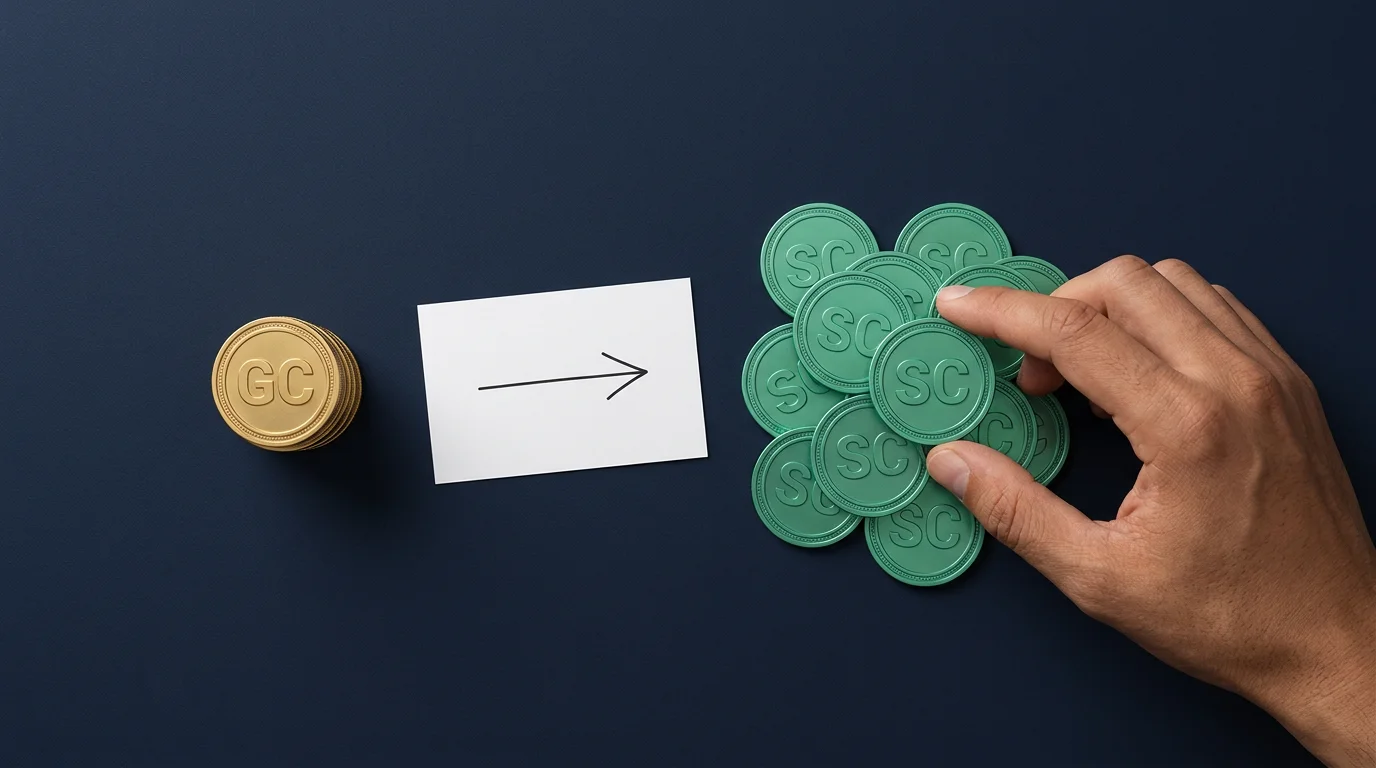
The mechanism works like this: players purchase Gold Coins, a virtual currency used for entertainment only, and receive Sweeps Coins as a free bonus alongside each purchase. Critically, Sweeps Coins can also be obtained without any purchase at all — through daily logins, social media promotions, mail-in requests (called Alternate Method of Entry, or AMoE), and referral programs. Because there is always a free path to obtaining the redeemable currency, operators argue that no "consideration" is required to participate. The prize element remains (Sweeps Coins can be redeemed for cash), and chance is inherent to the games — but with consideration removed from the equation, the model sits in a legal gray zone that has allowed it to operate across most of the United States without state gambling licenses.
The scale of this model caught regulators off guard. According to a KPMG industry primer published in June 2025, sweepstakes casinos grew at a compound annual rate of 60-70% between 2020 and 2024. Americans have spent more than billion on social casino currency over the past decade, per data cited by the Social and Promotional Gaming Association. That trajectory turned what began as a niche corner of online entertainment into an industry generating billions in annual revenue — all while operating under promotional sweepstakes law rather than gaming regulation.
The player base reflects this mainstreaming. An AGA survey conducted in June 2025 with 2,250 respondents found that the typical sweepstakes casino player does not fit a narrow demographic mold. About 35% fall between ages 31 and 40, with another 27% in the 41-50 range. The gender split is nearly even at 51% male and 49% female. Notably, 42% of players report household incomes below ,000, and 38% have no education beyond high school — numbers that have fueled concerns among regulators and consumer advocacy groups about the model's impact on vulnerable populations.
SC casinos exist, in the most practical sense, because they fill a gap. Only seven US states have legalized regulated online casino gaming (iGaming). In the other 43 states and territories, anyone wanting to play slots, blackjack, or roulette online had essentially two options before sweepstakes casinos scaled up: unregulated offshore sites or nothing at all. The sweepstakes model provided a third path — technically legal, widely accessible, and rapidly evolving. Whether that path stays open depends on the regulatory battles unfolding in state capitals across the country.
How the Dual-Currency System Works
The engine behind every SC casino online is a two-currency architecture that separates entertainment play from redeemable value. Understanding this system is the single most important thing for any new player, because confusing the two currencies — Gold Coins and Sweeps Coins — is exactly how misplaced expectations form.
Gold Coins are the primary purchase currency. When you buy a coin package at a sweepstakes casino, what you are actually buying is Gold Coins. These have no cash value whatsoever. They cannot be redeemed, withdrawn, or converted into real money. Think of them as arcade tokens — useful for playing games on the platform, nothing more. Packages typically range from a few dollars to several hundred, and operators are not shy about offering volume discounts on larger bundles.
Sweeps Coins are where the real action happens. Every Gold Coin purchase comes with a free allocation of Sweeps Coins, usually at a ratio around 1 SC per spent. These bonus coins can be used to play the same games, but unlike Gold Coins, Sweeps Coins can eventually be redeemed for cash prizes — after meeting playthrough requirements (typically 1x the amount, meaning you need to wager the SC once before requesting a withdrawal). This is the core of the promotional sweepstakes mechanism: the player pays for one thing (entertainment currency) and receives another (redeemable currency) for free.
The financial dynamics of this system are revealing. According to research published by RG.org in September 2025, the sweepstakes casino industry generated approximately .4 billion in net revenue during 2024 after prize payouts. That means operators returned 65-70% of total purchases back to players in the form of Sweeps Coin redemptions. For context, that payout ratio sits between the hold rates of traditional slot machines (which typically retain 5-15% of wagers) and social casinos (which return nothing, since their currencies have no cash value).
Approximately 75% of sweepstakes casino players never make a purchase at all. They play exclusively with Gold Coins received for free through daily logins, AMoE requests, and social media promotions — according to data from SPGA members reported in December 2024.
This free-to-play majority is not a bug in the business model — it is a feature. The large base of non-paying players creates activity, generates social proof, and, crucially, supports the legal argument that consideration is not required to participate. The 25% who do buy Gold Coin packages generate the revenue, while the remaining 75% provide the legal scaffolding that keeps the entire enterprise on the right side of sweepstakes law. It is an elegant structure, whatever your opinion on whether it should exist.
How to Evaluate an SC Casino Platform
Most sweepstakes casino rankings found online are ordered by affiliate payout — whoever pays the referring site the most gets the top spot. That is not a useful way to choose a platform. What follows is a framework for evaluating any SC casino on your own terms, using publicly verifiable criteria rather than promotional positioning.
Before getting into evaluation criteria, one market reality matters more than any individual platform's features: the sweepstakes industry is dominated by a single company to a degree that would make antitrust lawyers nervous. According to a Scientific Games newsletter published in July 2025, the largest operator controlled approximately 90% of the US sweepstakes casino market as recently as 2023. That dominance has since eroded to roughly 50% by late 2024 as competitors entered and expanded, according to Eilers & Krejcik Gaming data reported by SBC Americas. This concentration means most players will encounter the dominant operator's platforms first — but it does not mean those platforms are automatically the best fit for every player.
The leading operator's financial scale remains unmatched across the sector. The parent company reported global revenue of approximately A.13 billion (around .94 billion USD) and net profit of A1.6 million (~7 million USD) for its fiscal year ending June 2025, with an estimated 98% of revenue coming from the United States — per financial data reported by Sigma.world. Those are not startup numbers — they are the financials of a mature, highly profitable operation running primarily on the sweepstakes model.

Payout Reliability and Speed
This is the single most important factor and the one most likely to cause frustration. Look for platforms that publish clear processing timelines and consistently meet them. Across the industry, payout speeds range from under 6 hours (cryptocurrency withdrawals) to 5+ business days (traditional bank transfers). First-time withdrawals always take longer due to KYC review. The questions to ask: Does the platform disclose expected processing times in its terms? Are there consistent user reports of redemptions being delayed or denied without explanation? Is the minimum redemption threshold reasonable for your play style — a 100 SC minimum creates a much higher barrier than a 10 SC minimum, especially for free-to-play users.
Corporate Transparency
Legitimate operators disclose their parent company, jurisdiction of incorporation, and contact details. Check whether the operator is a publicly documented entity with traceable financials, or whether ownership is obscured behind shell structures and PO boxes. Some operators are publicly traded companies with audited financial statements; others operate under offshore entities with minimal disclosure. The gap between these two ends of the spectrum is a meaningful signal about operational legitimacy.
Game Library Quality
Game count alone is misleading — some operators inflate their numbers by counting Gold Coin and Sweeps Coin versions of the same title separately. More useful metrics: How many recognized third-party game providers supply content to the platform? Does the platform publish Return to Player (RTP) data for its games? Are the games exclusively proprietary, or does the library include titles from independently audited providers? The recent exit of several major game providers from the sweepstakes space — driven by regulatory uncertainty — has reduced selection at some platforms, making provider diversity a more important differentiator than it was a year ago.
Bonus Structure Transparency
Welcome bonuses at SC casinos are not directly comparable to traditional casino sign-up offers. A "25 SC" bonus means in potentially redeemable value before playthrough requirements — not a deposit match. Evaluate the actual mathematical value after accounting for playthrough (typically 1x). Some platforms front-load generous first-purchase ratios (e.g., 3x the normal SC-to-dollar rate) to acquire users, then offer significantly less favorable ratios on subsequent purchases. The daily login bonus and its consistency over time is often a better indicator of ongoing platform generosity than the headline welcome offer.
Responsible Gaming Infrastructure
Check whether the platform offers deposit limits, session time reminders, self-exclusion options, and prominently displays helpline information. The presence or absence of these tools tells you something about the operator's priorities. Platforms that are members of the Social and Promotional Gaming Association (SPGA) have committed to a voluntary code of conduct covering player protection — though this code has no enforcement mechanism or independent audit process.
No single SC casino excels across every metric. Prioritize the factors that matter most to your situation: if fast cashouts are critical, focus on platforms with cryptocurrency support and documented processing times. If game variety matters most, look for libraries sourced from multiple independent providers. If you are a free-to-play user, minimum redemption thresholds and daily bonus structures will affect your experience more than any other factor.
What to Compare Before Choosing a Platform
With dozens of SC casinos now operating in the US market, choosing one requires comparing specific operational details rather than relying on promotional headlines. The factors below represent the variables that most directly affect the player experience — and the ones most often obscured by marketing language.
Withdrawal Methods and Processing Times
The range across the industry is wide. Some platforms support only traditional bank transfers (ACH), with processing times of 1-5 business days. Others offer e-wallet options like Skrill, typically processing in 24-48 hours. A smaller number support cryptocurrency withdrawals (Bitcoin, Ethereum, Litecoin), which can clear in under 24 hours — sometimes within a few hours. The withdrawal method a platform supports will dictate how quickly you can access your redeemed funds, and not every platform offers every option. Check before you sign up, not after your first cashout.
Minimum Redemption Thresholds
This is the number that determines when you can actually withdraw. Across the market, minimum thresholds range from 10 SC ( equivalent) to 100 SC (0 equivalent). For free-to-play users earning fractions of a Sweeps Coin per day through login bonuses, a 100 SC minimum can represent months of daily play before any cashout is possible. A 10 SC threshold, by contrast, makes the redemption process accessible much sooner. This single number shapes the free-to-play experience more than almost any other factor.
Welcome Bonus Structure
Sign-up offers at sweepstakes casinos typically include a small allocation of free Sweeps Coins (ranging from 1 SC to 25 SC) and a larger pile of Gold Coins (which have no cash value). Some platforms also offer an enhanced SC-to-dollar ratio on your first Gold Coin purchase — often 2x to 3x the standard rate. The headline number matters less than the math behind it: how much redeemable value does the bonus actually represent after the 1x playthrough requirement? A 2 SC welcome bonus is worth in potential redemption value. A 25 SC bonus is worth . The difference is material.
Game Count and Provider Diversity
Reported game counts across SC casinos range from under 100 to over 800 titles. But these numbers deserve skepticism. Some operators count Gold Coin and Sweeps Coin versions of the same game as separate entries, artificially inflating totals. A more reliable indicator is the number of distinct third-party game providers represented in the library. A platform offering 200 games from 15 independent providers is likely offering more genuine variety than one listing 800 titles from a single proprietary source.
Regulatory Exposure
Not all SC casinos carry the same level of legal risk. Some operators have faced lawsuits, cease-and-desist orders, or attorney general investigations. Others have operated for years without significant regulatory challenges. Check whether the platform you are considering has been named in any enforcement actions, and whether it operates in states that have taken an explicitly hostile stance toward sweepstakes casinos. A platform's regulatory history is public information — and it is worth ten minutes of research before committing your time or money.
The most meaningful differences between SC casino platforms are not in their marketing — they are in their withdrawal infrastructure, minimum thresholds, provider relationships, and regulatory track records. Compare these specifics directly using each operator's published terms of service before choosing where to play.
Where SC Casinos Are Legal: US State Map
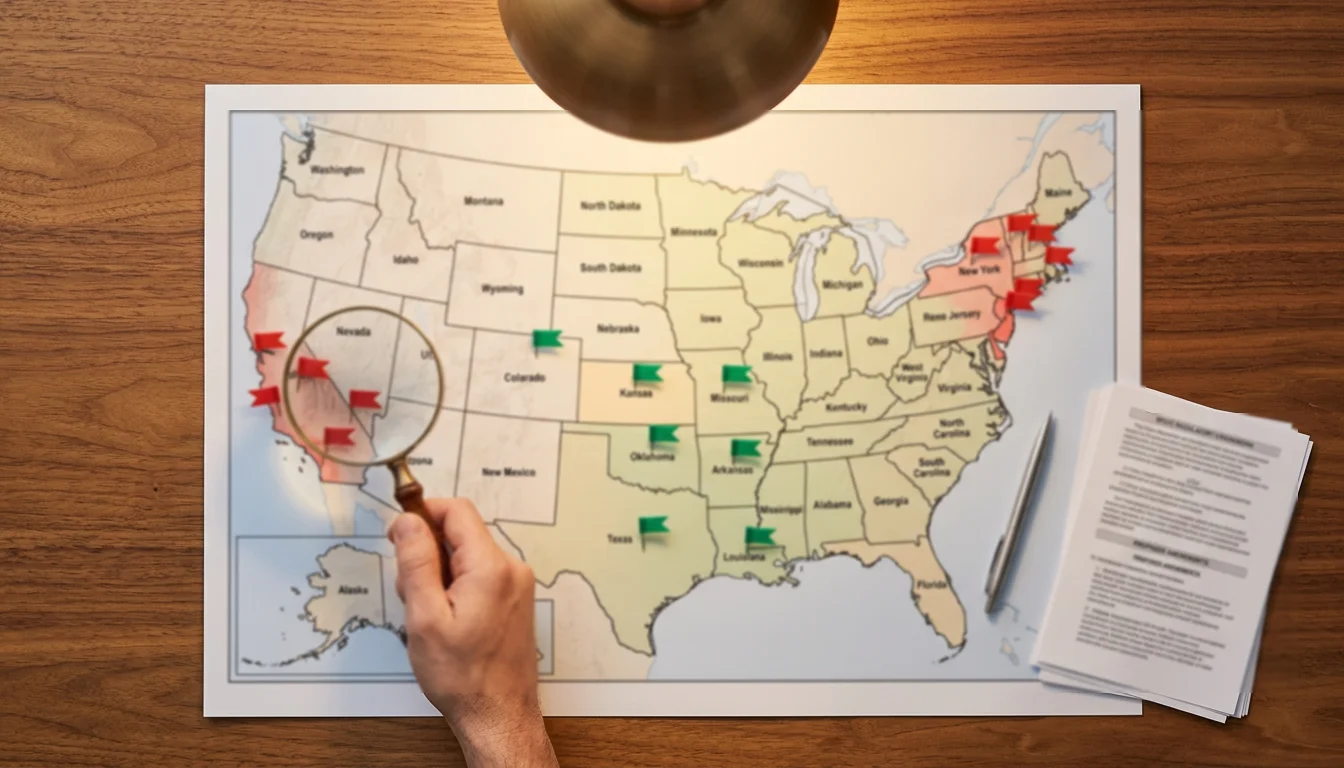
The legal map for sweepstakes casinos underwent its most dramatic transformation in 2025. Six states passed legislation explicitly banning SC casinos during the year, and those bans did not target marginal markets. California alone accounted for an estimated 17.3% of total US sweepstakes purchases — roughly .42 billion out of .31 billion in 2025, according to Eilers & Krejcik Gaming data compiled by SGLA.
As of early 2026, sweepstakes casinos remain accessible in approximately 33 states plus the District of Columbia. The states where play is prohibited or restricted include: Washington (longstanding ban), Idaho (longstanding ban), and the six that enacted bans in 2025 — California (AB 831), New York (SB 5935), Connecticut (SB 1235), Montana (SB 555), New Jersey (AB 5447 / SB 4282), and Nevada (SB 256). Several additional states operate in a gray zone where no explicit ban exists but enforcement actions have been taken.
"[Sweepstakes] couldn't get one vote in California. You know how hard that is? They can't agree on the colour of the carpet" — Shawn Fluharty, Delegate (West Virginia) and President of the National Council of Legislators from Gaming States, speaking at G2E in October 2025.
That unanimous vote in California is particularly significant because AB 831 goes further than a simple prohibition on operating a sweepstakes casino. The law extends criminal liability to every link in the supply chain: operators, payment processors, geolocation providers, game content suppliers, and even media partners who advertise these platforms. Penalties under AB 831 include fines of up to ,000 and imprisonment of up to one year, as analyzed by Frankfurt Kurnit Klein & Selz PC. The law took effect on January 1, 2026.
New York's ban targeted another massive market. The state generated an estimated 2 million in sweepstakes casino purchases in 2024, and Attorney General Letitia James had already sent cease-and-desist letters to 26 operators before the legislative ban formalized the state's position.
For players, the practical reality is straightforward: check your state's current status before signing up for any SC casino, and check it again periodically. The landscape shifted from "legal almost everywhere" to "legal in most states but shrinking" within a single legislative cycle. Operators use geolocation technology to block access from restricted states, so attempting to play from a banned jurisdiction using a VPN is both a violation of terms of service and, in some states, potentially illegal.
Regulatory Timeline: Bans and Bills
The regulatory crackdown on sweepstakes casinos accelerated faster than most analysts predicted. What began as scattered enforcement actions in 2023-2024 evolved into a coordinated legislative wave by mid-2025. Here is how the timeline unfolded.
Eilers & Krejcik Gaming originally projected the sweepstakes casino industry would reach .7 billion in net revenue for 2025. By September 2025, they had revised that estimate downward to billion — a 16% year-over-year growth rate instead of the anticipated 36%. More strikingly, EKG's 2026 forecast calls for a 10% decline to .6 billion, the first contraction in the industry's history, driven primarily by the loss of major state markets.
The enforcement landscape in 2025 was even more aggressive than the legislative one. Regulators and attorneys general in more than 12 states issued over 100 cease-and-desist orders to sweepstakes operators during the year. Louisiana sent 40 C&D notices, West Virginia issued 47 subpoenas, and Arizona added its own batch of enforcement actions. New York's attorney general directed cease-and-desist orders to 26 individual operators before the state's legislative ban even passed.
"This issue has brought lawmakers together ... it represents illegal gambling and revenue theft in many states. Rarely do we agree on anything as lawmakers, but on this issue, we agree that this represents illegal gambling operations" — Shawn Fluharty, President of the National Council of Legislators from Gaming States, NCLGS Winter Conference, December 2025.
The American Gaming Association has been framing the stakes in even broader terms. The AGA estimated that unregulated and illegal gambling operators — a category in which it includes sweepstakes casinos — handled approximately 9 billion in wagers during 2024, costing the regulated gaming industry an estimated .3 billion in annual revenue. Whether you agree with the AGA's classification of sweepstakes casinos as "illegal" depends on your reading of the law, but the financial incentive behind the regulated industry's push for bans is unmistakable.
Key dates in the timeline: Washington and Idaho had preexisting bans. In early 2025, Montana (SB 555) and Connecticut (SB 1235) moved first among the new wave. California's AB 831 passed unanimously and was signed by Governor Newsom in October 2025, with an effective date of January 1, 2026. New York (SB 5935), New Jersey (AB 5447), and Nevada (SB 256) followed during the same legislative session. Multiple additional states have pending legislation or active attorney general investigations as of early 2026.
How to Get Free Sweeps Coins
One of the defining features of the SC casino online model — and the legal cornerstone operators rely on — is that players can always obtain Sweeps Coins without spending a cent. This is not a marketing gimmick; it is a structural requirement. If the only way to get SC were through purchase, the "no consideration" argument would collapse. Here are the actual paths to free Sweeps Coins, ranked roughly by practicality.
Daily login bonuses are the most common method. Nearly every sweepstakes casino offers free Gold Coins and a small allocation of Sweeps Coins simply for logging in each day. The amounts are modest — typically 0.3 to 1 SC per day — but they accumulate. Some platforms run streak systems that increase the daily reward for consecutive logins over 7, 14, or 30 days. WOW Vegas and Pulsz are among the more generous platforms in this category.
Social media promotions offer another route. Operators regularly run giveaways on Facebook, Instagram, X (formerly Twitter), and Discord. These typically require following the account, liking or sharing a post, or commenting with a specific hashtag. The SC amounts tend to be small per event (1-5 SC) but can spike during holiday promotions or new game launches.
Alternate Method of Entry (AMoE) is the most legally significant free-play mechanism, even though it is the least used in practice. AMoE allows players to request free Sweeps Coins by sending a physical letter to the casino operator. The format varies by platform but generally requires a handwritten or printed request mailed to a specific address, including your registered email and account details. Operators are legally obligated to fulfill AMoE requests, and the typical fulfillment delivers 5-10 SC per accepted request. Most platforms allow one AMoE request per day, though processing times of 7-14 days make this a patience game.
Referral programs reward existing players for bringing in new users. The referring player typically receives a SC bonus (ranging from 5 to 50 SC depending on the platform) when their referral registers and completes a qualifying action — usually account verification or a first purchase. Stake.us has run some of the more aggressive referral programs in the space.
First-purchase bonuses technically involve spending money, but the SC-to-dollar ratio on initial purchases is almost always significantly higher than on subsequent ones. A typical first-purchase offer might give you 30 SC for a Gold Coin package — three times the normal rate.
The bottom line: you absolutely can play sweepstakes casinos without paying. The experience will be slower and the stakes lower, but the mechanisms are real — roughly three out of four SC casino players take exactly this approach.
Redeeming SC for Cash: Process and Speed
The ability to convert Sweeps Coins into actual cash is what separates SC casinos from pure social casinos — and it is the part of the experience that generates the most questions and the most frustration. The process is straightforward in theory but involves several steps that can slow things down, especially on your first withdrawal.
The redemption flow follows a standard sequence across most platforms. First, you need to meet the playthrough requirement — typically 1x, meaning every SC must be wagered at least once before it becomes eligible for redemption. Second, your account must pass KYC verification, which requires submitting government-issued photo ID, proof of address, and sometimes a selfie for facial matching. Third, you submit a withdrawal request for the SC amount you want to redeem (minus any amount below the platform's minimum threshold). Fourth, the operator processes the request and transfers funds via your chosen withdrawal method.
The scale of money flowing through this process is significant. VGW alone paid out approximately .83 billion in Sweeps Coin redemptions during its fiscal year 2023/24, up from .2 billion the prior year — per financial data reported by SBC Americas from court documents. This is not a token redemption system; it is a full-scale financial operation handling billions in annual payouts.
Payout speed varies meaningfully by platform and method. Crypto-focused platforms like Stake.us and LuckyStake can process withdrawals in under 24 hours (sometimes under 6 hours for cryptocurrency). Traditional bank transfers at established operators like Chumba typically take 1-5 business days. Skrill-enabled platforms like Pulsz and Sweet Sweeps fall in the 24-48 hour range. First-time withdrawals almost always take longer because of the KYC review, which can add 1-3 additional business days or more if documents need resubmission.

Minimum redemption thresholds are another variable. Some casinos set the floor at 10 SC (effectively ), while others require accumulating 100 SC (0) before any withdrawal is possible. For free-to-play users earning a fraction of a SC per day through logins, a 100 SC minimum can represent months of play before any cash-out is possible.
Game Types at Sweepstakes Casinos
Sweepstakes casinos started with a narrow selection of proprietary slot games that, frankly, looked and felt like budget imitations of real casino titles. That has changed dramatically. Today's leading SC casino online platforms offer game libraries spanning slots, table games, live dealer experiences, crash games, and fish-style arcade titles — in many cases sourced from the same providers that supply regulated online casinos.
Slots dominate the landscape, accounting for the vast majority of games at every SC casino. The quality range is wide. Some platforms feature titles from well-known providers with published RTP (Return to Player) data — Mega Bonanza at 98.4%, Crown Coins games averaging 97.96%, and the legendary Book of 99 offering a 99% theoretical return. Others run proprietary games where the RTP is either unpublished or difficult to verify. Unlike regulated casinos where gaming commissions mandate RTP disclosure, sweepstakes operators are not uniformly required to share this data.
Table games — blackjack, roulette, baccarat, and video poker — are available at most larger platforms but with a noticeably smaller selection than their slot counterparts. The virtual versions generally follow standard rules, though some SC casinos modify house rules slightly (for example, restricting doubling down or altering blackjack payout ratios from the standard 3:2).
Live dealer games represent the fastest-growing category at sweepstakes casinos. These stream real dealers from studio environments, allowing players to participate in real-time blackjack, roulette, and baccarat games using Sweeps Coins. The experience closely mirrors what is offered at regulated iGaming platforms, though the number of available tables and operating hours may be more limited.
Crash games have found a particularly strong audience at SC casinos, especially among younger players. A multiplier climbs from 1x upward, and the player must cash out before it "crashes." Rapid rounds, player agency, and the social element of watching others have made crash games a staple at platforms like Stake.us.
Fish games (also called fish table games) represent the more arcade-oriented end of the spectrum. Players shoot at fish and other underwater targets, earning points (and SC) based on what they hit. These titles blend skill-based aiming with randomized target values, creating a hybrid that appeals to players who find traditional slots too passive.
One significant development affecting game availability across the entire sector: Pragmatic Play, one of the largest game providers in the world, exited the US sweepstakes market in September 2025. Several other major providers — including Evolution, Playtech, Booming Games, and Live88 — also restricted or pulled their content from SC platforms during the same period. This provider exodus, driven by the regulatory uncertainty surrounding sweepstakes casinos, has reduced the game selection at several platforms and raised questions about the long-term quality of content available in the space.
Sweepstakes Casinos vs Real Money Casinos
The distinction between sweepstakes casinos and licensed real-money casinos is at once legally significant and, from the player's perspective, increasingly blurry. An AGA survey of 2,250 participants in June 2025 found that 90% of sweepstakes casino players consider what they are doing to be gambling. Sixty-eight percent said they play specifically to win money, and 80% reported spending money on a monthly basis. The players themselves are not confused about what this is — even if the legal framework insists it is something different.
"This entire business model is essentially a too-clever-by-half attempt to offer online casino gateways to the public. The so-called sweepstakes model that runs all of the time isn't like any traditional sweepstakes model I've ever heard of" — Tres York, Vice President of Government Relations, American Gaming Association, October 2025.
The structural differences are real, though. Licensed real-money online casinos operate under state gaming commissions, submit to regular audits, maintain mandatory reserve funds, and pay state gaming taxes. As of early 2026, iGaming is fully operational in seven states — New Jersey, Pennsylvania, Michigan, West Virginia, Connecticut, Delaware, and Rhode Island — with Maine having signed its authorization law in January 2026 and expected to launch later in the year. The US commercial gaming industry generated a record .7 billion in gross gaming revenue during 2025, with regulated iGaming alone surpassing billion in monthly revenue for the first time in December 2025 — per the AGA's Commercial Gaming Revenue Tracker.
Sweepstakes casinos, by contrast, do not hold state gaming licenses, do not pay gaming taxes, and are not subject to the same audit requirements or player protection mandates. According to SCCG Management, SC casinos operate entirely outside the state gaming tax framework, though three of the largest operators have begun voluntarily paying state sales tax on Gold Coin purchases — a move interpreted as positioning for potential future regulation rather than legal obligation.
For players, the practical differences break down along several lines. Availability: sweepstakes casinos can be accessed in ~33 states; regulated iGaming in seven. Player protections: regulated casinos offer state-backed dispute resolution, mandatory self-exclusion registries, and audited game fairness; sweepstakes casinos rely on self-regulation, primarily through the SPGA's voluntary code of conduct. Taxes: regulated casino winnings are reported via W-2G forms; sweepstakes redemptions trigger a 1099-MISC (with the reporting threshold rising from 0 to ,000 starting in 2026 under the One Big Beautiful Bill Act). RTP: regulated casinos must disclose return-to-player percentages; sweepstakes casinos are not uniformly required to do so, though some voluntarily publish this data.
The financial comparison is illuminating but requires apples-to-oranges awareness. The .7 billion GGR figure for regulated gaming measures net revenue after payouts. The billion sweepstakes figure represents gross purchases before operator payouts. After players redeem their winnings, net sweepstakes revenue drops to roughly .4 billion — still significant, but a fraction of the regulated industry's scale.
Tax Obligations on SC Winnings
Here is one of the most commonly misunderstood aspects of SC casino online play: yes, your Sweeps Coin redemptions are taxable income. The IRS does not care whether the legal framework calls it a sweepstakes prize or a gambling winning — if you receive money, it gets reported.
The tax treatment of sweepstakes casino payouts differs from traditional gambling in one critical way. Regulated casinos issue W-2G forms for certain winning thresholds. Sweepstakes casinos, because they are classified as promotional sweepstakes rather than gambling operations, issue 1099-MISC forms instead. According to SCCG Management's analysis, operators were previously required to issue a 1099-MISC to any player whose total Sweeps Coin redemptions exceeded 0 in a calendar year. Under the One Big Beautiful Bill Act, that reporting threshold rises to ,000 for the 2026 tax year onward — a significant change that reduces paperwork for smaller-volume players, though all redemptions remain taxable regardless of whether a form is issued.
For redemptions exceeding ,000, operators may withhold 24% for federal taxes before sending you the remainder. The IRS Gaming Withholding and Reporting Threshold table specifies that sweepstakes and wagering pool payouts of 0 or more, at odds of 300:1 or greater, trigger W-2G reporting — but because SC casinos issue 1099-MISC instead, the practical reporting threshold is now ,000 cumulative (from 2026), with mandatory withholding kicking in at ,000.
There is another distinction that trips up players who try to offset their SC casino spending against their winnings. At regulated casinos, gambling losses can be deducted against gambling winnings on Schedule A (itemized deductions). With sweepstakes casinos, the money you spend on Gold Coin packages is legally a purchase of virtual entertainment currency — not a gambling wager. That means your Gold Coin purchases generally cannot be deducted as gambling losses against your Sweeps Coin redemption income. You report the redemption income on Schedule 1, Line 8b (Other Income), but the offsetting deduction that regular gamblers rely on may not apply.
Two significant regulatory changes take effect in 2026 under the One Big Beautiful Bill Act, signed into law in July 2025. First, the reporting threshold for slot machine jackpots at regulated casinos rises from ,200 to ,000 (W-2G), with future indexing to inflation. Second — and directly relevant to sweepstakes players — the 1099-MISC reporting threshold also increases from 0 to ,000 for tax year 2026, with inflation adjustments starting in 2027. This means SC casino operators will no longer be required to issue a 1099-MISC until your annual redemptions exceed ,000 — a meaningful reduction in reporting paperwork for moderate-stakes players, though all income remains taxable regardless of whether a form is issued.
Track every Sweeps Coin redemption you make during the calendar year. Starting in tax year 2026, operators must issue a 1099-MISC when your annual total exceeds ,000 (up from the previous 0 threshold) under the One Big Beautiful Bill Act. If your total exceeds ,000, expect 24% withholding. All redemption income remains taxable even below the reporting threshold. Consult a tax professional — particularly regarding whether your Gold Coin purchases qualify as deductible offsets, because the answer is not straightforward.
Safety, Licensing and Verification
Sweepstakes casinos do not carry state gaming licenses — that is the entire point of the model. But the absence of licensing does not mean there are no signals of legitimacy, or that all platforms operate with the same standards. The gap between the best-run SC casinos and the worst is enormous, and players need to know how to tell the difference.
Start with corporate transparency. Legitimate operators disclose their parent company, jurisdiction of incorporation, and contact details. VGW (Chumba Casino, LuckyLand Slots) is a publicly documented Australian company with audited financials. Stake.us operates under a Curaçao entity. Platforms that obscure their ownership structure, use PO boxes as their only contact, or cannot be traced to a registered corporate entity should trigger immediate caution.
Look for published terms of service that clearly describe: the rules governing Sweeps Coin redemptions, the playthrough requirements, the KYC process, and the dispute resolution mechanism. If the terms are vague, missing, or buried behind multiple clicks, that tells you something about the operator's relationship with transparency.
Third-party certifications add a layer of credibility, though they are not universal. Some sweepstakes casinos use Random Number Generator (RNG) testing from firms like GLI (Gaming Laboratories International) or iTech Labs. Others rely on the game providers' own certifications. The absence of any third-party audit should be treated as a yellow flag, not a disqualifier — many legitimate operators simply have not invested in this layer of verification yet — but its presence is a meaningful positive signal.
The 5 million settlement in the Benson v. DoubleDown Interactive case — approved by the court in June 2023 — illustrates the stakes. DoubleDown, a social casino formerly operated by IGT (and sold to DoubleU Games in 2017), was found to violate Washington state gambling laws despite operating under a model similar to sweepstakes casinos. The case established that courts are willing to look beyond the promotional language and assess whether the actual activity constitutes gambling. For players, this means the legal protections they assume exist may not hold up in practice — and choosing a well-established platform with clear policies reduces (but does not eliminate) that risk.
Red flags to watch for include: unrealistic bonus offers with no clear terms, operators launching without a verifiable corporate history, platforms that accept deposits but delay or deny redemptions without explanation, and any site that does not enforce age verification and KYC procedures.
Responsible Gaming Tools and Resources
The responsible gaming infrastructure at sweepstakes casinos ranges from genuinely robust to functionally nonexistent, depending on the platform. This is one of the sharpest contrasts with regulated iGaming, where state gaming commissions mandate specific player protection tools as a condition of licensure.
The Social and Promotional Gaming Association (SPGA) introduced a voluntary Code of Conduct in December 2024, built around four pillars: player protection, marketing standards, data privacy, and responsible advertising.
"The pillars of the SPGA Code of Conduct highlight the technology and processes already in place at most social sweeps operators to ensure that the millions of adults who enjoy these games do so in a safe and reliable environment" — Camilla Wright, SPGA Spokesperson.
The operative word there is "voluntary." SPGA members commit to implementing self-exclusion options, deposit limits, session time reminders, and age verification protocols. But the code has no enforcement mechanism, no independent audit process, and no penalties for non-compliance. Compare this to regulated states where operators face fines, license suspensions, or revocation for failing to meet responsible gaming requirements.

The advertising dimension adds another layer of concern. Approximately 50% of online casino advertising seen by consumers in early 2025 came from sweepstakes casinos, according to Sensor Tower data cited by the AGA. Sweepstakes operators are not bound by the advertising codes that govern regulated gaming companies in licensed states — no mandatory responsible gaming messaging, no restrictions on targeting, and no pre-approval requirements for promotional content.
For individual players, the most effective responsible gaming approach is self-directed. Set a personal spending limit before you start, use whatever deposit limit tools the platform provides, keep a running total of your Gold Coin purchases versus your SC redemptions, and take the daily login bonuses at face value rather than as an obligation to play every day. If you find yourself chasing losses or spending beyond your budget, the National Problem Gambling Helpline (1-800-522-4700) operates 24/7 and is confidential.
Our Ranking Methodology
Transparency in methodology matters because the sweepstakes casino review space is saturated with rankings that exist primarily as affiliate marketing vehicles. Here is exactly how the platforms in this guide were evaluated, and why certain factors carry more weight than others.
The ranking framework uses five weighted criteria. Payout reliability and speed (25% weight) measures how consistently and quickly a platform processes Sweeps Coin redemptions, based on publicly reported user experiences and, where available, operator-disclosed processing times. Legal standing and corporate transparency (25% weight) evaluates whether the operator discloses its parent company, jurisdiction, and terms clearly, and whether the platform has faced regulatory enforcement actions. Game library quality (20% weight) accounts for the breadth and depth of available titles, the presence of recognized third-party providers, and whether RTP data is published. Responsible gaming tools (15% weight) assesses the availability of self-exclusion, deposit limits, session controls, and helpline access. Bonus structure and value (15% weight) examines the true mathematical value of welcome offers, daily logins, and ongoing promotions after accounting for playthrough requirements.
What this methodology explicitly does not include: affiliate commission rates, brand advertising budgets, or operator partnerships. A casino that pays higher referral fees does not score higher.
Data sources include operator websites and published terms, public financial filings (where available), regulatory databases and enforcement records, player-reported experiences from verified review platforms, and industry analysis from organizations including KPMG, the AGA, Eilers & Krejcik Gaming, and the SPGA. Where data conflicts between sources, we note the discrepancy rather than choosing the more favorable number.
This methodology is reviewed quarterly. Rankings reflect conditions as of the most recent review cycle. Markets, operators, and regulations change — a top-ranked platform today may face new restrictions or ownership changes tomorrow.
Frequently Asked Questions
Can you really win real money at sweepstakes casinos?
Yes, but with important caveats. Sweeps Coins earned through play can be redeemed for cash prizes after meeting playthrough requirements (typically 1x wagering) and completing KYC verification. The redemption rate is generally 1 SC = USD. However, you are not technically "winning money" in the legal sense — you are redeeming a promotional currency for a cash prize. The distinction matters for tax purposes (1099-MISC rather than W-2G) and for legal protections. Operators returned approximately 65-70% of total purchases to players as SC redemptions in 2024, so the payout flow is real and substantial. Starting in 2026, operators must issue a 1099-MISC only when total redemptions exceed ,000 (up from 0 previously), but all redemptions remain taxable regardless.
Are sweepstakes casinos legal in my state?
Sweepstakes casinos are currently accessible in approximately 33 US states plus the District of Columbia. States with explicit bans include Washington, Idaho, and the six states that enacted new prohibitions in 2025: California (AB 831, effective January 1, 2026), New York (SB 5935), Connecticut (SB 1235), Montana (SB 555), New Jersey (AB 5447), and Nevada (SB 256). Several additional states have active enforcement actions or pending legislation. Every SC casino uses geolocation technology to verify your location, so you cannot access platforms from restricted states. The legal landscape is changing rapidly — check your state's current status before signing up, and be aware that more states may enact restrictions during 2026.
How do I redeem Sweeps Coins for cash?
The redemption process follows four steps at most SC casinos. First, meet the playthrough requirement — usually 1x, meaning you wager each SC once. Second, complete identity verification (KYC) by submitting government-issued ID and proof of address. Third, submit a withdrawal request for the amount you want to convert, subject to the platform's minimum threshold (10 SC to 100 SC depending on the casino). Fourth, choose your withdrawal method — bank transfer (ACH), Skrill, or cryptocurrency depending on the platform. Processing times range from under 6 hours for crypto to 5+ business days for bank transfers. First-time withdrawals take longer because of the initial KYC review.