
Sweepstakes Casino Crypto Withdrawal: Bitcoin, USDT and Other Options
Best Non GamStop Casino UK 2026
Loading...
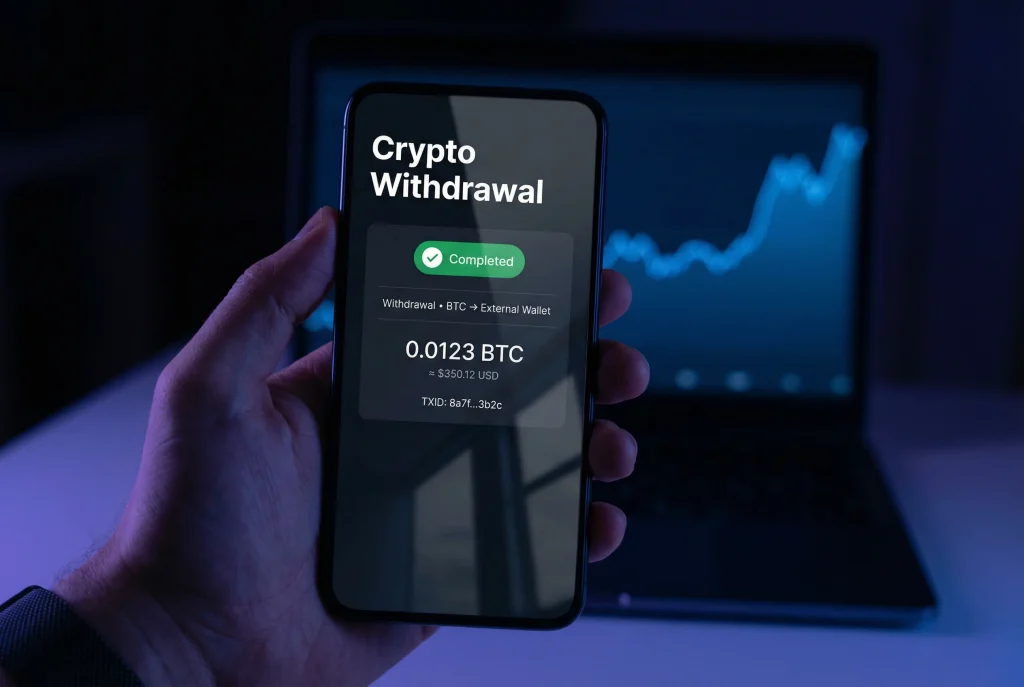
Cryptocurrency is the fastest withdrawal method available at sweepstakes casinos. Where ACH bank transfers take one to five business days and Skrill can sit in processing for 24 to 72 hours, crypto payouts at several SC casinos are completed in under six hours — and some platforms process them in under one. For players who prioritize speed above all else, crypto is not just an option, it is the option.
But speed comes with trade-offs. Crypto withdrawals introduce tax complexity, irreversibility risks, and a dependency on external wallet infrastructure that traditional banking methods do not require. This guide covers which sweepstakes casinos support crypto payouts, how the process compares to conventional methods, and what you need to know about the tax and security implications before choosing blockchain over bank transfer.
Which SC Casinos Support Crypto Payouts
Not every sweepstakes casino offers cryptocurrency withdrawals. The platforms that do tend to be newer entrants or crypto-native operations that built their infrastructure around blockchain payments from the start. Many of the industry’s largest and longest-running platforms have historically relied on bank transfers and Skrill, with no crypto withdrawal option available.
The most crypto-friendly sweepstakes casinos support a range of coins including Bitcoin (BTC), Ethereum (ETH), Litecoin (LTC), and various stablecoins like USDT and USDC. Processing times at the fastest platforms see many payouts confirmed within a few hours of the request being submitted — significantly quicker than traditional banking channels.
Beyond the leading crypto-native platforms, several mid-size and newer operators have added crypto withdrawal capabilities, supporting at least Bitcoin and USDT (Tether) as withdrawal options. The specific coins available, minimum withdrawal amounts, and processing timelines vary by platform and are worth confirming in each casino’s payment terms before you commit to a particular withdrawal method.
| Platform Type | Supported Coins | Minimum Crypto Withdrawal | Typical Processing Time |
|---|---|---|---|
| Crypto-native SC casinos | BTC, ETH, LTC, USDT, USDC | Varies by coin | 1–6 hours |
| Mid-size platforms with crypto | BTC, USDT | ~$25 equivalent | 2–24 hours |
| Legacy platforms (no crypto) | Not available | N/A | N/A |
The absence of crypto at several of the industry’s highest-volume platforms is notable. Their reliance on traditional payment rails reflects both established infrastructure and a likely preference for payment methods that carry less regulatory ambiguity. For players at these platforms who want crypto exposure, the only path is to withdraw via bank transfer or Skrill and then purchase cryptocurrency separately through an exchange.
Processing Speed: Crypto vs Traditional Methods
Speed is the primary selling point of crypto withdrawals, and the advantage is substantial. A crypto payout at the fastest platforms can clear in as little as one hour. The same redemption via ACH bank transfer at a typical sweepstakes casino takes one to five business days. Skrill sits in the middle at 24 to 72 hours, depending on the casino’s internal processing queue.
The speed advantage applies to the casino-to-wallet leg of the transaction only. Once the casino broadcasts the crypto transaction, network confirmation times add additional delay depending on the blockchain. Bitcoin transactions typically confirm within 10 to 60 minutes depending on network congestion and the fee attached. Stablecoins on faster networks like Tron (for USDT-TRC20) or Solana can confirm in seconds.
To put the volume in perspective, one of the industry’s largest holding companies processed $2.83 billion in sweepstakes prize payouts during their fiscal year 2023/24, according to financial data reported by SBC Americas. That is almost entirely through traditional banking channels. The sweepstakes industry’s total payout volume is large enough that even a modest shift toward crypto processing would represent billions of dollars moving through blockchain rails annually.
For practical purposes, the speed comparison breaks down like this: if you request a $100 withdrawal on Monday morning, crypto could have it in your wallet by Monday afternoon. Skrill might arrive by Wednesday. A bank transfer could land anywhere from Tuesday to Friday, depending on the casino’s review queue, the bank’s processing schedule, and whether any weekends or holidays intervene. That three-to-four-day gap is the cost of using traditional payment infrastructure.
Tax Implications of Crypto Withdrawals
Withdrawing sweepstakes winnings in cryptocurrency creates a layered tax situation that is more complex than cashing out via bank transfer. You are dealing with two separate tax events: the SC redemption itself and any subsequent gain or loss on the cryptocurrency you received.
The first layer is the sweepstakes income. When you redeem SC for crypto, the value of the cryptocurrency at the moment of receipt is your taxable income. If you cash out 100 SC and receive $100 worth of Bitcoin, that $100 is reportable income. According to SCCG Management analysis, the 1099-MISC reporting threshold — raised to $2,000 under the 2026 OBBBA rules (from $600 previously) — applies regardless of the withdrawal method. Receiving your payout in BTC rather than USD does not change the reporting obligation, and all income remains taxable even below the form-issuance threshold.
The second layer is capital gains. Once you hold the cryptocurrency, any increase in its value before you sell or spend it constitutes a capital gain. If you receive $100 in BTC, the price of Bitcoin rises, and you later sell for $130, the $30 profit is a taxable capital gain — short-term if sold within a year, long-term if held longer. Conversely, if Bitcoin drops and you sell for $80, you have a $20 capital loss that may be deductible.
Stablecoins like USDT and USDC mitigate the second layer by maintaining a fixed peg to the US dollar. Withdrawing in USDT means the value at receipt and the value at spending are nominally identical, eliminating capital gains considerations unless the stablecoin depegs. For players who want crypto speed without crypto volatility, stablecoins are the pragmatic choice.
Record-keeping is critical. Document the date, amount, and USD value of every crypto withdrawal from a sweepstakes casino. If the casino’s 1099-MISC reports a different value than your records show (due to timing differences in price feeds), having your own contemporaneous documentation protects you during a tax review. This is not optional complexity — it is a direct consequence of choosing crypto over a method that settles in USD.
Security Considerations
Cryptocurrency transactions are irreversible. Once the casino sends BTC, ETH, or USDT to your wallet address, there is no chargeback, no dispute process, and no way to recover funds sent to the wrong address. This finality is a feature of blockchain design, not a limitation — but it means that mistakes are permanent in a way that bank transfers are not.
The most critical security step is verifying your wallet address before confirming any withdrawal. Copy and paste the address rather than typing it manually. Some malware is designed to swap clipboard contents with an attacker’s wallet address, so verify the first and last several characters of the pasted address against your wallet’s display after pasting. Sending even a small test withdrawal first is a reasonable precaution if you are using a new wallet or a new casino.
Wallet choice matters. Hardware wallets (Ledger, Trezor) offer the strongest security by keeping your private keys offline. Software wallets on your phone or computer are more convenient but vulnerable to malware and device theft. Exchange wallets (Coinbase, Kraken) are the easiest to use but introduce counterparty risk — the exchange holds your keys, and if the exchange is compromised, your funds are at risk.
For the specific use case of receiving sweepstakes casino payouts, a reputable exchange wallet is usually the most practical option. It provides a stable receiving address, handles the conversion to USD if you want to cash out immediately, and integrates with tax reporting tools that track cost basis and capital gains automatically. The security trade-off is real but manageable for most players who are not holding large crypto balances long-term.